Introduction
Every modern advancement in medicine—from the discovery of antibiotics and life-saving vaccines to minimally invasive surgical techniques and personalized cancer therapies—has one thing in common: medical research.
Medical research is the foundation upon which evidence-based healthcare is built. Every medication prescribed by a physician, every diagnostic test performed in a laboratory, every clinical guideline followed in a hospital, and every public health intervention implemented by governments originates from years of carefully planned scientific investigation.
Despite its importance, many students and early-career researchers perceive medical research as an intimidating field reserved for scientists working in sophisticated laboratories. In reality, research is a systematic method of asking important questions, collecting reliable evidence, analyzing data objectively, and using the findings to improve patient care, medical education, healthcare systems, and public health.
Whether you are an undergraduate medical student planning your first research project, a postgraduate trainee preparing a thesis, a clinician interested in evidence-based practice, or a researcher pursuing innovative discoveries, understanding the principles of medical research is essential for your professional development.
This guide provides a comprehensive introduction to medical research, including its definition, purpose, characteristics, importance, types, and role in modern healthcare. It also explains how medical research contributes to scientific advancement and why research literacy has become a core competency for healthcare professionals worldwide.
Learning Objectives
After reading this article, you will be able to:
- Define medical research and explain its purpose.
- Describe the role of medical research in improving healthcare.
- Understand the characteristics of high-quality medical research.
- Differentiate between various types of medical research.
- Recognize the complete research lifecycle.
- Appreciate the importance of evidence-based medicine.
- Identify common misconceptions about research.
- Understand how research skills contribute to professional growth.
What Is Medical Research?
Medical research is a systematic, ethical, and scientific process of generating new knowledge or validating existing knowledge to improve human health, prevent disease, enhance diagnosis, develop effective treatments, and optimize healthcare delivery.
Unlike routine clinical practice, which focuses on providing care to individual patients, medical research aims to answer carefully formulated scientific questions whose findings can benefit larger populations.
Medical research is driven by curiosity, critical thinking, and the pursuit of evidence. Researchers identify gaps in current knowledge, formulate hypotheses or research questions, collect reliable data, analyze the findings using appropriate methods, and disseminate the results to advance medical science.
At its core, medical research seeks answers to questions such as:
- What causes a particular disease?
- Which treatment is most effective?
- How can diseases be prevented?
- What factors increase the risk of illness?
- How can healthcare systems become more efficient?
- How can medical education be improved?
- Which interventions improve patient outcomes?
By answering these questions, research transforms observations into evidence and evidence into better clinical practice.
Definitions of Medical Research
Although the wording varies slightly across organizations and textbooks, the fundamental principles remain the same.
General Definition
Medical research is a systematic investigation designed to develop or contribute to generalizable knowledge related to human health.
Practical Definition
Medical research is the process of asking important health-related questions and answering them using scientifically sound methods.
Educational Definition
For students, medical research can be understood as:
“A structured process of identifying a problem, collecting reliable evidence, analyzing data objectively, and drawing meaningful conclusions that contribute to improving healthcare.”
Why Is Medical Research Important?
Medical research is not simply an academic exercise—it is the engine that drives improvements in healthcare.
Without research:
- New diseases would remain poorly understood.
- Effective medicines could not be developed.
- Surgical innovations would not occur.
- Vaccines could not be tested.
- Clinical guidelines would rely on opinion rather than evidence.
- Public health policies would lack scientific support.
Research enables healthcare professionals to replace assumptions with evidence, ensuring that decisions are based on reliable scientific findings rather than tradition or anecdotal experience.
Real-World Examples of Medical Research Impact
Example 1: Vaccination
The development of vaccines against diseases such as polio, measles, hepatitis B, and COVID-19 required decades of laboratory research, clinical trials, regulatory review, and post-marketing surveillance.
Millions of lives have been saved because researchers systematically evaluated vaccine safety and effectiveness before widespread implementation.
Example 2: Antibiotics
The discovery of penicillin revolutionized medicine.
Subsequent decades of microbiological and clinical research led to the development of numerous antibiotics that transformed the management of bacterial infections and dramatically reduced mortality from previously fatal diseases.
Example 3: Cancer Treatment
Modern oncology increasingly relies on targeted therapies and immunotherapies that are based on molecular and genetic research.
These treatments have improved survival rates for many cancers while reducing treatment-related toxicity compared with traditional chemotherapy.
Example 4: Evidence-Based Clinical Guidelines
Organizations such as national health authorities and professional medical societies develop clinical practice guidelines by systematically reviewing published evidence rather than relying solely on expert opinion.
These guidelines help clinicians deliver standardized, effective, and patient-centered care.
Characteristics of Medical Research
High-quality medical research shares several defining characteristics.
1. Systematic
Research follows a structured process rather than random observations.
Each step—from identifying the research question to interpreting the results—is carefully planned and documented.
2. Scientific
Research uses established scientific methods to minimize bias and maximize accuracy.
Hypotheses are tested using reproducible methodologies rather than personal beliefs or assumptions.
3. Ethical
All medical research involving humans or animals must adhere to ethical principles.
Researchers are responsible for protecting participant rights, ensuring informed consent, maintaining confidentiality, and minimizing potential risks.
4. Objective
Researchers must analyze data impartially.
Conclusions should be based on evidence rather than personal expectations or desired outcomes.
5. Reproducible
Other researchers should be able to repeat the study using the same methodology and obtain similar results.
Reproducibility is essential for building confidence in scientific findings.
6. Transparent
Every stage of the research process should be clearly reported so that readers can evaluate the validity of the findings.
Transparency includes describing the study design, participant selection, statistical analysis, limitations, and potential conflicts of interest.
Table 1. Characteristics of High-Quality Medical Research
|
Characteristic |
Description |
|
Systematic |
Follows a structured and organized process |
|
Scientific |
Uses validated scientific methods |
|
Ethical |
Protects participants and follows ethical guidelines |
|
Objective |
Minimizes personal bias |
|
Transparent |
Reports methods and findings clearly |
|
Reproducible |
Can be repeated by other researchers |
|
Evidence-Based |
Draws conclusions from reliable data |
|
Generalizable* |
Findings may be applicable to broader populations when appropriate |
*Generalizability depends on the study design, sample, and research objectives.
A Brief History of Medical Research
Medical research has evolved over thousands of years. Early civilizations such as those in Egypt, Mesopotamia, India, China, and Greece relied primarily on observation, experience, and traditional practices to understand disease and develop treatments. While many of these observations contributed to medical knowledge, they often lacked systematic scientific evaluation.
The transformation of medicine into a scientific discipline accelerated during the Renaissance and the Scientific Revolution. Physicians and scientists began emphasizing careful observation, experimentation, and documentation rather than relying solely on tradition or authority.
The nineteenth and twentieth centuries marked a turning point in medical research. Advances in microbiology, pathology, pharmacology, epidemiology, and biostatistics enabled researchers to investigate disease mechanisms more rigorously. The development of randomized controlled trials, ethical oversight, and evidence-based medicine further strengthened the reliability of medical research.
Today, medical research is a multidisciplinary field that integrates clinical medicine, laboratory science, epidemiology, genomics, artificial intelligence, data science, and public health to improve healthcare worldwide.
Major Milestones in Medical Research
|
Period |
Major Advancement |
Impact on Healthcare |
|
Ancient Civilizations |
Observation-based medicine |
Foundation of medical practice |
|
Renaissance |
Human anatomy and scientific observation |
Improved understanding of disease |
|
17th–18th Century |
Experimental science |
Introduction of hypothesis testing |
|
19th Century |
Germ theory and microbiology |
Identification of infectious diseases |
|
20th Century |
Antibiotics, vaccines, clinical trials |
Major reduction in morbidity and mortality |
|
Late 20th Century |
Evidence-Based Medicine |
Standardized clinical decision-making |
|
21st Century |
Genomics, precision medicine, AI |
Personalized healthcare and advanced diagnostics |
The Purpose of Medical Research
The primary purpose of medical research is to generate reliable evidence that improves human health. Rather than simply collecting information, research seeks to answer meaningful questions that can influence patient care, healthcare policy, education, and scientific understanding.
Medical research serves several important purposes.
1. Understanding Disease
Researchers investigate the biological, genetic, environmental, and behavioral factors that contribute to disease development.
Examples include:
- Why do some individuals develop diabetes while others do not?
- What genetic mutations increase cancer risk?
- How do infectious diseases spread within populations?
Understanding disease mechanisms is the first step toward developing effective prevention and treatment strategies.
2. Improving Diagnosis
Accurate diagnosis is fundamental to effective healthcare.
Research helps develop:
- New laboratory tests
- Imaging techniques
- Biomarkers
- Artificial intelligence diagnostic systems
- Screening programs
For example, advances in molecular diagnostics have enabled earlier detection of certain cancers and inherited diseases.
3. Developing Better Treatments
Many current treatments are the result of decades of research.
Medical research evaluates:
- New medications
- Surgical procedures
- Medical devices
- Rehabilitation strategies
- Behavioral interventions
Clinical trials determine whether these interventions are safe, effective, and appropriate for widespread use.
4. Preventing Disease
Prevention is often more effective and less costly than treatment.
Research contributes to prevention through:
- Vaccination programs
- Lifestyle interventions
- Screening initiatives
- Infection control strategies
- Public health policies
5. Improving Healthcare Systems
Medical research is not limited to laboratories and hospitals.
Health services research investigates questions such as:
- How can waiting times be reduced?
- Which healthcare models improve patient satisfaction?
- How can hospitals optimize resource utilization?
- Which interventions reduce healthcare costs while maintaining quality?
6. Advancing Medical Education
Educational research improves how healthcare professionals are trained.
Examples include:
- Problem-Based Learning (PBL)
- Competency-Based Medical Education
- Simulation training
- Digital learning platforms
- Assessment methods such as OSCEs
Objectives of Medical Research
Although individual studies have different aims, most research falls into one or more of the following objectives.
|
Objective |
Description |
|
Exploration |
Investigate new or poorly understood problems |
|
Description |
Describe diseases, populations, or health events |
|
Explanation |
Identify causes and risk factors |
|
Prediction |
Estimate future outcomes or disease risk |
|
Evaluation |
Assess interventions, programs, or policies |
|
Innovation |
Develop new diagnostic tools, therapies, or technologies |
Understanding these objectives helps researchers select appropriate study designs and methodologies.
The Complete Medical Research Process
Medical research follows a structured sequence of steps. Although the details vary depending on the study design, the overall process is similar across most research projects.
Step 1: Identify a Research Problem
Every research project begins with a meaningful question or problem.
Researchers often identify research problems through:
- Clinical observations
- Unanswered questions in practice
- Literature gaps
- Public health challenges
- Emerging diseases
- Technological innovations
A well-defined problem forms the foundation of a successful research project.
Step 2: Review Existing Literature
Before conducting new research, investigators examine what is already known.
A literature review helps researchers:
- Avoid duplication
- Identify research gaps
- Understand previous methodologies
- Refine research questions
- Justify the importance of the study
Step 3: Formulate the Research Question
A good research question should be:
- Clear
- Focused
- Feasible
- Relevant
- Scientifically important
Several frameworks, such as FINER and PICOT, help researchers develop high-quality research questions. These frameworks will be discussed in dedicated AOC articles.
Step 4: Develop the Study Design
Researchers choose the methodology that best answers their research question.
Possible study designs include:
- Cross-sectional studies
- Cohort studies
- Case-control studies
- Randomized controlled trials
- Qualitative studies
- Systematic reviews
- Meta-analyses
The study design influences the validity, reliability, and generalizability of the findings.
Step 5: Obtain Ethical Approval
Research involving human participants or identifiable data typically requires review by an ethics committee or Institutional Review Board (IRB).
Ethical approval ensures that participant rights, safety, and confidentiality are protected throughout the study.
Step 6: Collect Data
Researchers gather information using appropriate methods, such as:
- Questionnaires
- Interviews
- Clinical examinations
- Laboratory investigations
- Electronic health records
- Imaging studies
- Public databases
Data collection must follow standardized procedures to minimize bias and improve accuracy.
Step 7: Analyze Data
Collected data are processed using statistical or qualitative analytical methods.
The choice of analysis depends on:
- Study design
- Variable types
- Sample size
- Research objectives
Reliable analysis transforms raw data into meaningful scientific evidence.
Step 8: Interpret the Findings
Researchers evaluate whether the results answer the original research question.
Interpretation should consider:
- Statistical significance
- Clinical significance
- Strengths
- Limitations
- Potential sources of bias
- Comparison with previous studies
Step 9: Disseminate the Findings
Research has little value if it is never shared.
Dissemination may include:
- Journal publications
- Conference presentations
- Posters
- Policy reports
- Educational materials
- Clinical guidelines
Publishing high-quality research contributes to global scientific knowledge and informs future investigations.
Figure Suggestion
Figure 1: The Medical Research Cycle

Types of Medical Research: An Overview
Medical research encompasses a wide range of study types, each designed to answer different kinds of scientific questions.
Broadly, medical research can be categorized into the following areas:
- Basic (Laboratory) Research
- Translational Research
- Clinical Research
- Epidemiological Research
- Public Health Research
- Health Services Research
- Medical Education Research
- Qualitative Research
- Mixed Methods Research
- Evidence Synthesis (Systematic Reviews and Meta-Analyses)
Each category has distinct objectives, methodologies, strengths, and limitations. Detailed articles on each type will be available within the Research Methodology section of Annals of Curiosity.
Medical Research vs Clinical Practice
Although closely related, medical research and clinical practice have different primary goals.
|
Medical Research |
Clinical Practice |
|
Generates new knowledge |
Applies existing knowledge |
|
Answers scientific questions |
Provides patient care |
|
Produces evidence |
Uses evidence |
|
Follows research protocols |
Follows clinical guidelines |
|
Focuses on populations |
Focuses on individual patients |
|
May involve experimentation under ethical approval |
Delivers established treatments in routine care |
Many clinicians contribute to both domains by combining patient care with research activities, thereby helping translate scientific discoveries into improved clinical outcomes.
Understanding the Different Types of Medical Research
Not all medical research is designed to answer the same question. Some studies seek to understand how diseases develop at the molecular level, while others evaluate new treatments, improve healthcare delivery, or explore patients’ lived experiences.
Selecting the appropriate type of research depends on the research question, available resources, ethical considerations, and the desired outcome. Understanding these research categories is essential for students, clinicians, and researchers because it helps them critically evaluate published literature and design appropriate studies.
The following sections introduce the major types of medical research and explain how each contributes to evidence-based medicine.
Basic Research (Fundamental Research)
Definition
Basic research, also known as fundamental or laboratory research, aims to improve our understanding of biological processes without an immediate focus on clinical application.
It seeks to answer fundamental questions about the human body, diseases, genetics, cells, microorganisms, and biochemical pathways.
Common Research Settings
- Research laboratories
- Universities
- Biomedical research institutes
- Pharmaceutical research centers
Examples
- Investigating how cancer cells evade the immune system.
- Studying genetic mutations associated with inherited disorders.
- Understanding the molecular mechanisms of Alzheimer’s disease.
- Exploring bacterial resistance to antibiotics.
Although the findings may not immediately benefit patients, basic research provides the scientific foundation for future medical innovations.
Advantages
- Expands scientific knowledge.
- Identifies disease mechanisms.
- Supports the development of future therapies.
- Drives innovation in medicine.
Limitations
- Often requires substantial funding.
- Results may take years to translate into clinical practice.
- Clinical applications are not always immediately apparent.
Applied Research
Definition
Applied research uses existing scientific knowledge to solve practical healthcare problems.
Rather than focusing on discovering new biological mechanisms, applied research aims to improve diagnosis, treatment, prevention, or healthcare delivery.
Examples
- Evaluating a new insulin delivery device.
- Comparing two surgical techniques.
- Assessing the effectiveness of a telemedicine program.
- Developing a hospital infection-control protocol.
Applied research bridges the gap between scientific discovery and clinical implementation.
Comparison Table: Basic vs Applied Research
|
Feature |
Basic Research |
Applied Research |
|
Primary Goal |
Generate new scientific knowledge |
Solve practical healthcare problems |
|
Setting |
Laboratory |
Clinical or community settings |
|
Immediate Patient Benefit |
Usually indirect |
Often direct |
|
Time to Clinical Impact |
Long-term |
Short- to medium-term |
|
Examples |
Cell biology, genetics |
Drug trials, healthcare interventions |
Translational Research
Definition
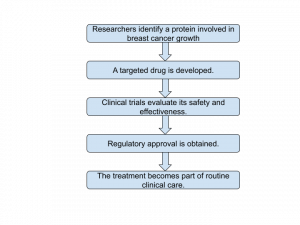
Translational research converts laboratory discoveries into practical applications that improve patient care. It is often described as “bench-to-bedside” research because it translates findings from laboratory benches into clinical practice.
More recently, the concept has expanded to include “bedside-to-community”, ensuring that research findings are effectively implemented across healthcare systems and populations.
Why Is Translational Research Important?
Scientific discoveries alone do not improve health unless they are transformed into diagnostics, treatments, or public health interventions. Translational research accelerates this process.
Example
This pathway illustrates how laboratory discoveries ultimately benefit patients.
Clinical Research
Definition
Clinical research involves human participants and aims to improve the prevention, diagnosis, treatment, or management of diseases.
Clinical research generates much of the evidence used in evidence-based medicine and clinical guidelines.
Common Types of Clinical Research
- Clinical trials
- Observational studies
- Diagnostic studies
- Prognostic studies
- Comparative effectiveness research
Example
A randomized controlled trial comparing a new antihypertensive medication with standard treatment.
Why It Matters
Clinical research directly influences patient care and forms the basis of evidence-based clinical practice.
Biomedical Research
Biomedical research investigates the biological mechanisms underlying health and disease. It combines disciplines such as:
- Anatomy
- Physiology
- Biochemistry
- Molecular biology
- Pharmacology
- Immunology
- Genetics
Biomedical research often overlaps with basic and translational research but has a broader scope that includes both laboratory investigations and clinically relevant biological studies.
Clinical Research vs Biomedical Research
These terms are often used interchangeably, but they are not identical.
|
Clinical Research |
Biomedical Research |
|
Conducted in human participants |
May involve humans, animals, cells, or tissues |
|
Evaluates patient care |
Investigates biological mechanisms |
|
Focuses on diagnosis and treatment |
Focuses on understanding disease processes |
|
Produces evidence for clinical practice |
Generates biological knowledge that may later influence clinical care |
Epidemiological Research
Definition
Epidemiological research studies the distribution, frequency, determinants, and outcomes of diseases within populations.
Rather than focusing on individual patients, epidemiology examines patterns across communities and populations.
Major Questions Addressed
- Who develops the disease?
- Where does the disease occur?
- When does it occur?
- Why does it occur?
- What increases or decreases risk?
Examples
- Investigating the prevalence of diabetes in urban populations.
- Identifying smoking as a risk factor for lung cancer.
- Monitoring influenza outbreaks.
Epidemiological research provides the evidence required for public health planning and disease prevention.
Public Health Research
Public health research aims to improve the health of entire populations rather than individual patients.
It addresses issues such as:
- Disease prevention
- Health promotion
- Vaccination programs
- Environmental health
- Health policy
- Community interventions
Example
Evaluating whether a nationwide smoking cessation campaign reduces tobacco-related diseases.
Health Services Research
Healthcare outcomes depend not only on treatments but also on how healthcare systems function.
Health services research examines:
- Accessibility of healthcare
- Quality of care
- Healthcare costs
- Patient safety
- Hospital management
- Healthcare efficiency
- Resource allocation
Example
Comparing patient outcomes before and after implementing an electronic medical record system.
Medical Education Research
Medical education research investigates how healthcare professionals learn and how educational methods can be improved.
This field has become increasingly important with the adoption of competency-based education and digital learning technologies.
Common Topics
- Problem-Based Learning (PBL)
- Team-Based Learning (TBL)
- Simulation-based education
- Clinical skills assessment
- Objective Structured Clinical Examinations (OSCEs)
- Feedback strategies
- Curriculum development
Example
Comparing student performance after traditional lectures versus flipped classroom teaching.
For educators, this type of research contributes to more effective teaching methods and improved learner outcomes.
Quantitative Research
Definition
Quantitative research collects and analyzes numerical data to answer research questions.
It uses statistical methods to measure variables, test hypotheses, and determine relationships between factors.
Examples
- Measuring blood pressure changes after treatment.
- Comparing recovery times between two surgical techniques.
- Estimating disease prevalence.
Strengths
- Objective measurement.
- Statistical analysis.
- Large sample sizes.
- High reproducibility.
Qualitative Research
Definition
Qualitative research explores experiences, perceptions, attitudes, beliefs, and behaviors rather than numerical outcomes.
It helps researchers understand why and how people think or behave in particular ways.
Common Data Collection Methods
- Interviews
- Focus groups
- Observations
- Document analysis
Example
Exploring patients’ experiences of living with chronic pain.
Qualitative research is particularly valuable when investigating complex human experiences that cannot be adequately explained using numbers alone.
Mixed Methods Research
Mixed methods research combines quantitative and qualitative approaches within a single study.
For example:
A researcher may first conduct a survey measuring patient satisfaction (quantitative) and then interview selected participants to understand the reasons behind their responses (qualitative).
This approach provides a more comprehensive understanding of complex healthcare issues.
Practical Tip
Choose your research type based on your research question—not based on familiarity with a particular method.
For example:
- If you want to measure the effectiveness of a treatment, a quantitative study or randomized controlled trial may be appropriate.
- If you want to understand patients’ experiences with that treatment, qualitative research may provide deeper insights.
- If you need both perspectives, a mixed methods design may be the best choice.
Primary Research vs Secondary Research
Medical research can broadly be classified into primary research and secondary research, depending on whether new data are collected or existing evidence is analyzed.
Primary Research
Primary research involves the collection of original data directly from participants, laboratories, clinical settings, or other sources.
Researchers design the study, recruit participants (when applicable), collect data, perform analyses, and interpret the findings.
Examples
- Randomized controlled trials
- Cross-sectional studies
- Cohort studies
- Case-control studies
- Laboratory experiments
- Qualitative interviews
- Surveys
- Diagnostic accuracy studies
Primary research contributes new scientific evidence to the medical literature.
Secondary Research
Secondary research synthesizes, evaluates, or reanalyzes data that have already been published.
Rather than collecting new data, researchers critically assess existing evidence to answer broader clinical or scientific questions.
Examples
- Narrative reviews
- Systematic reviews
- Meta-analyses
- Umbrella reviews
- Scoping reviews
- Clinical practice guidelines
Secondary research is particularly valuable because it integrates findings from multiple studies, providing a higher level of evidence for clinical decision-making.
Comparison Table: Primary vs Secondary Research
|
Feature |
Primary Research |
Secondary Research |
|
Data Source |
Original data collected by researchers |
Previously published studies or datasets |
|
Main Purpose |
Generate new evidence |
Summarize or synthesize existing evidence |
|
Time Requirement |
Usually longer |
Often shorter than primary studies |
|
Examples |
Clinical trials, surveys, cohort studies |
Systematic reviews, meta-analyses |
|
Contribution |
New scientific knowledge |
Higher-level interpretation of existing knowledge |
Medical Research and Evidence-Based Medicine
Evidence-Based Medicine (EBM) is the integration of:
- The best available research evidence
- Clinical expertise
- Patient values and preferences
Medical research provides the scientific evidence that underpins evidence-based clinical practice.
Without research:
- Clinical guidelines could not be developed.
- New therapies could not be evaluated.
- Healthcare decisions would rely largely on opinion and experience.
- Patient care would become inconsistent and potentially unsafe.
Every recommendation in modern healthcare—from antibiotic prescribing to cancer screening—is supported by decades of accumulated research.
Medical research therefore forms the foundation of evidence-based medicine, while evidence-based medicine represents the practical application of research findings in clinical care.
How Medical Research Improves Patient Care
Research contributes to patient care in numerous ways.
Earlier Diagnosis
Research has led to advanced imaging techniques, molecular diagnostics, and screening programs that detect diseases at earlier, more treatable stages.
Better Treatments
Clinical trials identify therapies that are more effective and safer than existing options.
Safer Healthcare
Research into patient safety reduces medication errors, hospital-acquired infections, and preventable complications.
Personalized Medicine
Advances in genomics and molecular biology allow treatments to be tailored to individual patient characteristics.
Improved Quality of Life
Research supports interventions that reduce symptoms, improve rehabilitation, and enhance long-term health outcomes.
Common Misconceptions About Medical Research
Many students hesitate to become involved in research because of common misconceptions.
Misconception 1: Research Is Only for Scientists
Reality: Clinicians, nurses, pharmacists, physiotherapists, public health professionals, educators, and students all contribute meaningfully to medical research.
Misconception 2: You Need an Advanced Degree to Start Research
Reality: Undergraduate students can participate in research projects under appropriate supervision and gradually develop research skills.
Misconception 3: Research Is Only About Statistics
Reality: Statistics are important, but research also involves asking meaningful questions, designing studies, collecting data, interpreting results, communicating findings, and applying evidence to practice.
Misconception 4: Every Research Project Must Discover Something Completely New
Reality: Many valuable studies validate previous findings, replicate research in different populations, evaluate interventions in new settings, or improve existing knowledge.
Misconception 5: Negative Results Are Failures
Reality: Well-conducted studies with negative or neutral findings contribute to scientific knowledge and help prevent unnecessary duplication of research.
Challenges in Medical Research
Although research is rewarding, it also presents challenges.
Common obstacles include:
- Limited funding
- Time constraints
- Difficulty recruiting participants
- Ethical considerations
- Data quality issues
- Publication bias
- Limited access to resources
- Statistical complexity
- Manuscript rejection
- Balancing research with clinical responsibilities
Recognizing these challenges allows researchers to prepare appropriate strategies and seek mentorship when needed.
How to Get Started in Medical Research
For beginners, entering the world of research may seem overwhelming. However, developing research skills is a gradual process.
Step 1
Develop curiosity and ask meaningful clinical or scientific questions.
Step 2
Learn the fundamentals of research methodology and evidence-based medicine.
Step 3
Read high-quality scientific literature regularly.
Step 4
Join an experienced research team or find a mentor.
Step 5
Participate in small research projects before leading your own.
Step 6
Develop skills in:
- Literature searching
- Critical appraisal
- Study design
- Data collection
- Biostatistics
- Scientific writing
- Reference management
Step 7
Present your work at conferences and publish your findings in peer-reviewed journals.
Research is a lifelong learning process. Every project contributes to your growth as a clinician, scientist, and healthcare professional.
Career Benefits of Learning Medical Research
Research skills provide advantages regardless of your career path.
Benefits include:
- Improved critical thinking
- Better clinical decision-making
- Stronger evidence appraisal skills
- Increased competitiveness for residency and postgraduate training
- Enhanced academic writing abilities
- Greater opportunities for collaboration
- Increased publication potential
- Leadership development
- Contribution to scientific advancement
- Lifelong professional development
Research literacy is now considered an essential competency for modern healthcare professionals.
Frequently Asked Questions (FAQs)
1. What is the primary purpose of medical research?
The primary purpose is to generate reliable evidence that improves health, prevents disease, enhances diagnosis, develops effective treatments, and strengthens healthcare systems.
2. Is medical research only for doctors?
No. Medical research is multidisciplinary and involves physicians, nurses, dentists, pharmacists, public health professionals, psychologists, statisticians, educators, and many other healthcare and scientific disciplines.
3. Can undergraduate students participate in research?
Yes. Many institutions encourage undergraduate involvement through supervised research projects, summer programs, student research societies, and elective research opportunities.
4. What is the difference between clinical practice and medical research?
Clinical practice focuses on caring for individual patients using current evidence, while medical research seeks to generate new knowledge that can improve future patient care.
5. Why is ethics important in medical research?
Ethics protects participants’ rights, safety, dignity, and privacy while ensuring that research is conducted responsibly and transparently.
6. What is evidence-based medicine?
Evidence-based medicine combines the best available research evidence with clinical expertise and patient preferences to guide healthcare decisions.
7. Do all research studies require statistical analysis?
No. Quantitative studies generally require statistical analysis, whereas qualitative studies use systematic methods to analyze textual or observational data.
8. What is the highest level of medical evidence?
While the hierarchy of evidence depends on the research question, systematic reviews and meta-analyses of high-quality studies are generally considered among the strongest forms of evidence for therapeutic interventions.
9. How long does it take to complete a research project?
The duration varies widely depending on the study design, available resources, ethical approvals, participant recruitment, and data analysis. Projects may take from several months to multiple years.
10. How can beginners improve their research skills?
Begin by learning research methodology, reading scientific literature, seeking mentorship, participating in supervised projects, and gradually developing skills in study design, data analysis, and scientific writing.